
The Best Handgun Ammo for Every Shooting Need
A single .45 ACP cartridge can generate over 400 foot-pounds of muzzle energy, yet its recoil is manageable due to the pistol’s mass and grip design. Handgun ammunition consists of a primer, propellant powder, and a bullet seated in a metallic case, which ignites to propel the projectile forward when the firing pin strikes. The main benefit of choosing the right load, such as a hollow point for defensive use, is controlled expansion and penetration that reduces over-penetration risk. For reliable function, always match the cartridge’s caliber and pressure rating to your specific firearm’s chamber specifications.
Understanding the Core Types of Pistol Cartridges

Understanding the core types of pistol cartridges starts with the rimless case, the standard for most semi-automatic handguns, designed for reliable feeding from a magazine. Next, the rimmed cartridge is common in revolvers, where the rim headspaces correctly in the cylinder. You’ll also encounter semi-rimmed and rebated rim designs, but those are niche. For practical shooting, the big split is between centerfire and rimfire ammunition. Centerfire uses a primer in the case head, making it reloadable and reliable for self-defense, while rimfire, like .22 LR, has the primer inside the rim—cheap but less powerful. A key detail is that bullet weight (measured in grains) changes recoil and terminal performance more than case shape, so always match your cartridge type to your firearm’s barrel specs.
Full Metal Jacket vs. Jacketed Hollow Point: What Each Round Does Best
Within handgun ammo, the choice between Full Metal Jacket (FMJ) and Jacketed Hollow Point (JHP) hinges on terminal performance versus penetration. An FMJ’s solid lead core, fully encased in copper, excels at barrier penetration and reliable feeding, making it ideal for range practice and competition where over-penetration risk is minimal. Conversely, a JHP expands upon impact, increasing wound cavity diameter while reducing penetration depth, which is optimal for self-defense as it transfers energy more efficiently into a threat. However, hollow points can fail to expand through heavy clothing or at low velocities, reverting to FMJ-like behavior. For target work, FMJ’s cost-effectiveness and feed 6.5 PRC Ammo for Sale reliability win; for personal protection, JHP’s controlled expansion offers superior stopping power with reduced risk to bystanders.
Understanding Calibers: 9mm, .45 ACP, .380, and Beyond
Understanding calibers like 9mm, .45 ACP, and .380 means matching the round to your shooting goals. The 9mm offers a balanced blend of manageable recoil, magazine capacity, and affordability, making it the default choice for most shooters. The .45 ACP delivers a heavier, slower push with significant Handgun Ammo for Sale stopping power, but often at the cost of capacity and sharper felt recoil. The .380 ACP is a compact, low-recoil option ideal for pocket pistols and backup guns, though it sacrifices velocity and energy compared to larger rounds. Beyond these, calibers like .40 S&W and 10mm Auto bridge power and capacity or offer extended range. **Choosing the right caliber directly impacts your accuracy, follow-up shot speed, and carry comfort.
- 9mm excels for high-capacity magazines and lower ammunition costs for practice.
- .45 ACP prioritizes subsonic, heavy-bullet energy for defensive scenarios.
- .380 ACP suits ultra-compact frames where concealability outweighs raw power.
Primer Types and Casing Materials: How They Affect Feeding and Extraction
Primer types and casing materials directly dictate how reliably your pistol feeds and extracts. Berndan versus boxer primers matter less for cycling than for reloading, but primer seating depth influences whether the case ignites cleanly or drags against the breechface, causing sluggish extraction. For casings, brass offers low friction against the feed ramp and springs back slightly after firing, easing extraction. Steel cases, by contrast, lack this flexibility—they expand more in the chamber, gripping tighter and provoking stubborn extraction, especially when dirty. Nickel-plated brass, though harder, smooths feeding in tight tolerances due to its slicker surface. Aluminum cases, lightweight but weak, can deform at the rim during ejection, leaving your slide struggling to grab the next round. Match your casing to your firearm’s action stiffness for flawless cycling.
Selecting the Right Load for Self-Defense vs. Target Practice
For target practice, prioritize inexpensive full metal jacket (FMJ) rounds; their hard lead core and copper coating feed reliably and deliver consistent recoil, letting you train volume without burning cash. For self-defense, choose a jacketed hollow point (JHP) like Federal HST or Speer Gold Dot, engineered to expand upon impact, creating a larger wound channel while reducing over-penetration risks in a home. The critical mismatch is practicing with FMJ’s lighter recoil, then trusting a Rifle Ammo for Sale heavier JHP under stress—your point of impact may shift. Zero your defensive firearm with your actual carry load, not target ammo. Q: Can I practice with FMJ and carry JHP of the same grain? A: Yes, but confirm both shoot to the same point of aim at 7–10 yards, tuning your sights to the JHP’s trajectory.
Why Bullet Weight and Velocity Change Recoil and Accuracy
Heavier bullets generate more recoil because they require greater propellant gas to accelerate to a given speed, while lighter bullets recoil less but may produce sharper, snappier impulse. The velocity of a handgun round alters the timing of that recoil—faster loads push the muzzle rearward quicker than slower ones, affecting your follow-up shot alignment. For accuracy, bullet weight and velocity interact with barrel twist rate; a 115-grain 9mm may group tightly in one pistol while a 147-grain subsonic load destabilizes in the same barrel. Lighter, faster projectiles also have shorter time-of-flight, reducing drop and wind drift, but heavier slugs resist deflection better at close range. Practical outcomes:
- Lower-velocity heavy loads reduce perceived muzzle flip, aiding recoil management.
- High-velocity light loads tighten shot groups at distance due to flatter trajectory.
- Match your bullet weight to the barrel’s twist rate for consistent stabilization.
Penetration Depth and Expansion: What to Look for in a Defensive Round
For defensive handgun ammunition, penetration depth is the primary arbiter of effectiveness, with the FBI’s 12-to-18-inch gel standard serving as the practical benchmark. A round that fails to reach 12 inches risks inadequate organ trauma, while overshooting 18 inches endangers bystanders. Expansion, conversely, dictates wound cavity diameter; a bullet that expands from 9mm to 15mm creates a larger permanent cavity, accelerating blood loss. The critical interplay is that expansion reduces penetration, so you must verify that a hollow point achieves both—typically 0.60–0.70 inches of expanded diameter *and* 14–16 inches of depth. Look for consistent expansion across barriers like denim and glass. Balancing penetration and expansion ensures reliable incapacitation without over-penetration.
Q: What is the ideal penetration depth for a defensive pistol round? A: Aim for 14 to 16 inches in ballistic gel—deep enough to reach vital organs from oblique angles, yet shallow enough to minimize risk to people behind the threat.
Matching Your Firearm’s Barrel Length to the Cartridge’s Ballistic Performance
Barrel length directly shapes how much powder burns before the bullet exits, so matching it to your cartridge matters more than you’d think. A short-barreled 9mm, say a 3-inch subcompact, loses velocity compared to a 5-inch duty gun, which can affect expansion in defensive loads. For target practice, lighter recoiling rounds might feel fine in a longer slide, but they can starve a short barrel of the pressure needed for consistent accuracy. Your barrel length dictates the minimum bullet weight and muzzle energy your cartridge must deliver to perform its role. Testing a few defensive loads through your exact barrel, not a similar one, is the only way to know your real numbers. Q: Does barrel length affect how a hollow point expands? A: Yes—shorter barrels often need lighter, faster bullets to hit expansion thresholds, while longer barrels can handle heavier projectiles.
How Bullet Construction Impacts Terminal Performance
In handgun ammo, bullet construction dictates how energy transfers to a target. A full metal jacket’s rigid, solid core penetrates deeply but often passes through, leaving a narrow wound channel. Conversely, a jacketed hollow point is engineered to expand upon impact, dramatically increasing its frontal diameter. This expansion, driven by the bullet’s scored nose and soft lead core, creates greater tissue disruption and a faster, more definitive energy dump. Bullet construction impacts terminal performance most clearly here: a properly expanding hollow point arrests within the target, transferring all its kinetic energy, while a non-expanding round might under-penetrate or over-penetrate, reducing stopping power and increasing risk. Choosing the right construction is thus the primary lever for achieving reliable, controlled terminal effect from a defensive handgun round.
Comparing Bonded, Solid Copper, and Jacketed Soft Point Projectiles
When comparing bonded, solid copper, and jacketed soft point projectiles for handguns, the trade-off hinges on weight retention versus penetration depth. Bonded bullets fuse jacket to core, preventing core-jacket separation and delivering deep, straight-line penetration through barriers like denim or drywall. Solid copper, being monolithic, expands reliably at lower velocities and resists fragmentation entirely, making it ideal for deep-penetration 7mm WSM Ammo for Sale scenarios where over-penetration or structural failure is a concern. Jacketed soft points, by contrast, offer rapid, dramatic expansion at the cost of weight loss—often shedding 20-30% of their mass on impact. This makes them devastating on soft tissue but less predictable against bone or heavy clothing. Choose bonded for consistent barrier performance, solid copper for extreme penetration, and soft points for maximum stopping power in unclothed targets.
Understanding Muzzle Energy and Stopping Power in Practical Terms
Muzzle energy, expressed in foot-pounds, quantifies the work a bullet can perform, but it does not directly predict stopping power in a handgun. In practical terms, energy figures are useful for comparing loads, yet a poorly penetrating bullet expends its energy on the surface, failing to disrupt vital structures. Stopping power relies more on penetration depth and wound channel diameter than on raw energy alone. A slow, heavy bullet that reaches the heart is more effective than a fast, fragmenting round that stops inches short. Therefore, evaluate penetration as the primary metric; ballistic gel tests offer a more realistic assessment than energy calculations. Ultimately, shot placement remains the decisive factor, with adequate energy simply ensuring the bullet has the capacity to reach critical anatomy.
How Crimp Style and Case Tension Affect Consistent Ignition
Consistent ignition in handgun ammunition hinges on the mechanical relationship between the case mouth and the seated bullet. A roll crimp, common in revolver cartridges, physically turns the case lip into the bullet’s canneler or crimp groove, preventing the projectile from moving forward under heavy recoil. Conversely, a taper crimp for semi-automatic rounds merely removes the case-mouth flare, relying almost entirely on neck tension—the friction from the case walls gripping the bullet—to hold the round at the correct overall length. If case tension is too light, the bullet can be pushed deeper into the case during feeding, spiking pressure and altering the burn rate. If too heavy, the case can buckle or the bullet can be shaved, leading to uneven start pressures. A consistent, calibrated crimp and uniform tension ensure the bullet resists inertial setback and the primer flash encounters a predictable volume of powder, producing stable, repeat ignition for every shot.
Practical Tips for Storing, Handling, and Maintaining Your Rounds
For handgun ammo, storage begins with a hard, airtight case and silica gel packs; moisture is your primer’s worst enemy. Keep rounds in a cool, stable environment below 75°F, never in a hot car or direct sunlight. When handling, inspect each cartridge for corrosion, dents, or loose bullets before loading—reject any with visible primer damage. Always load from the base, never force rounds into a magazine, and avoid oily fingers contaminating the brass. For maintenance, rotate your carry ammunition every six months by firing it at the range, then reloading with fresh stock. Wipe down stored rounds with a dry microfiber cloth to remove residue, and never lube cartridges themselves. Finally, keep ammo in original boxes inside a dedicated ammo can; this prevents primer deformation and preserves ballistic consistency for reliable feeding and ignition.
Safe Storage Methods to Prevent Corrosion and Primer Deterioration
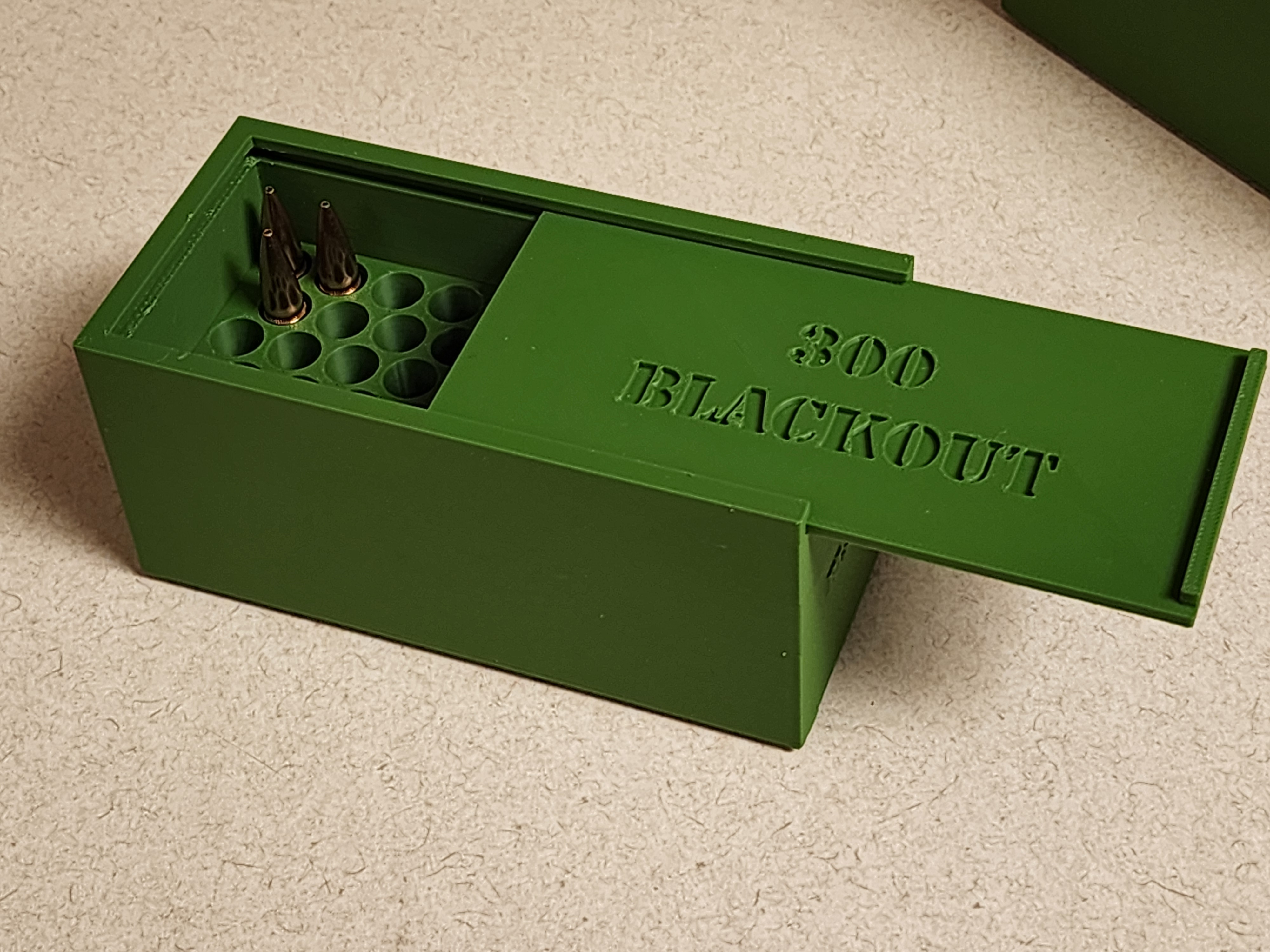
Store handgun ammunition in a cool, dry environment with stable humidity below 40% to prevent moisture from attacking brass cases and primers. Use sealed ammo cans with desiccant packs, avoiding direct contact with concrete floors where moisture migrates. For long-term storage, rotate stocks every six months to redistribute protective lubricants; never oil cartridges themselves, as this can seep into primers and kill ignition. *A thin silica-gel layer is more effective than relying Rimfire Ammo for Sale solely on factory lacquer, which degrades over decades.* Can humidity alone cause primer deterioration? Yes—prolonged exposure above 50% relative humidity accelerates primer compound breakdown and case oxidation, even without visible liquid water.
Signs of Ammo Fatigue: Powder Burn, Dented Casings, and Misfires
Spotting ammo fatigue early keeps your handgun reliable. If you see dark, sooty residue around the case mouth or primer, that’s a powder burn from inconsistent ignition—often a sign the propellant has degraded. Dented casings, especially near the shoulder or rim, mean rounds have been bumped around in storage or a magazine; these can fail to chamber or extract smoothly. Misfires—where you pull the trigger and hear only a click—are the most obvious red flag. When this happens, follow this sequence:
- Keep the muzzle pointed downrange for 30 seconds.
- Eject the round and inspect the primer for a light strike.
- If the primer looks fine but the round didn’t fire, discard it immediately.
Rotate your stock Ammunition for Sale regularly so old rounds don’t sit long enough to show these signs.
Rotating Your Stockpile: Ensuring Freshness for Reliable Function
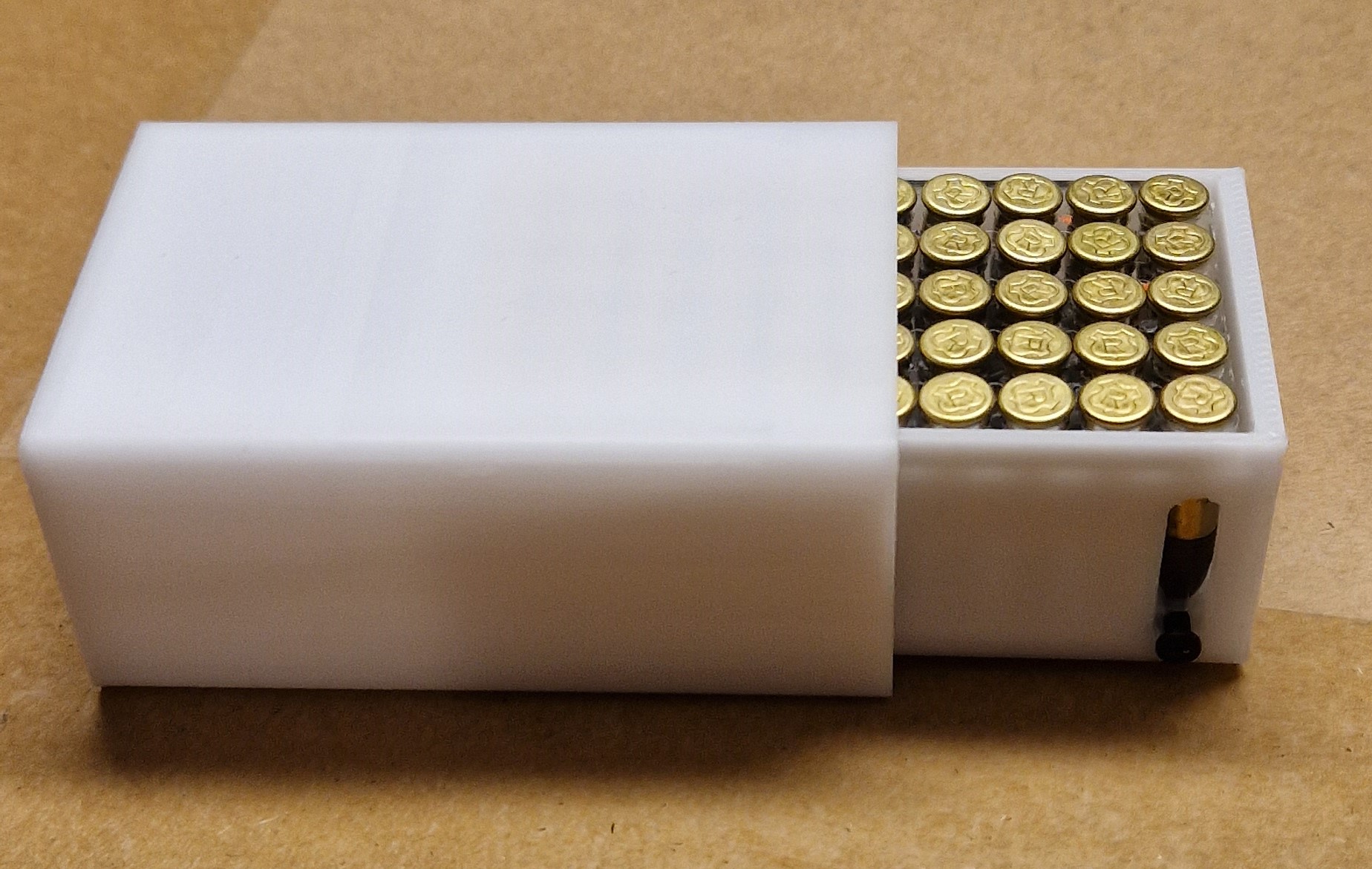
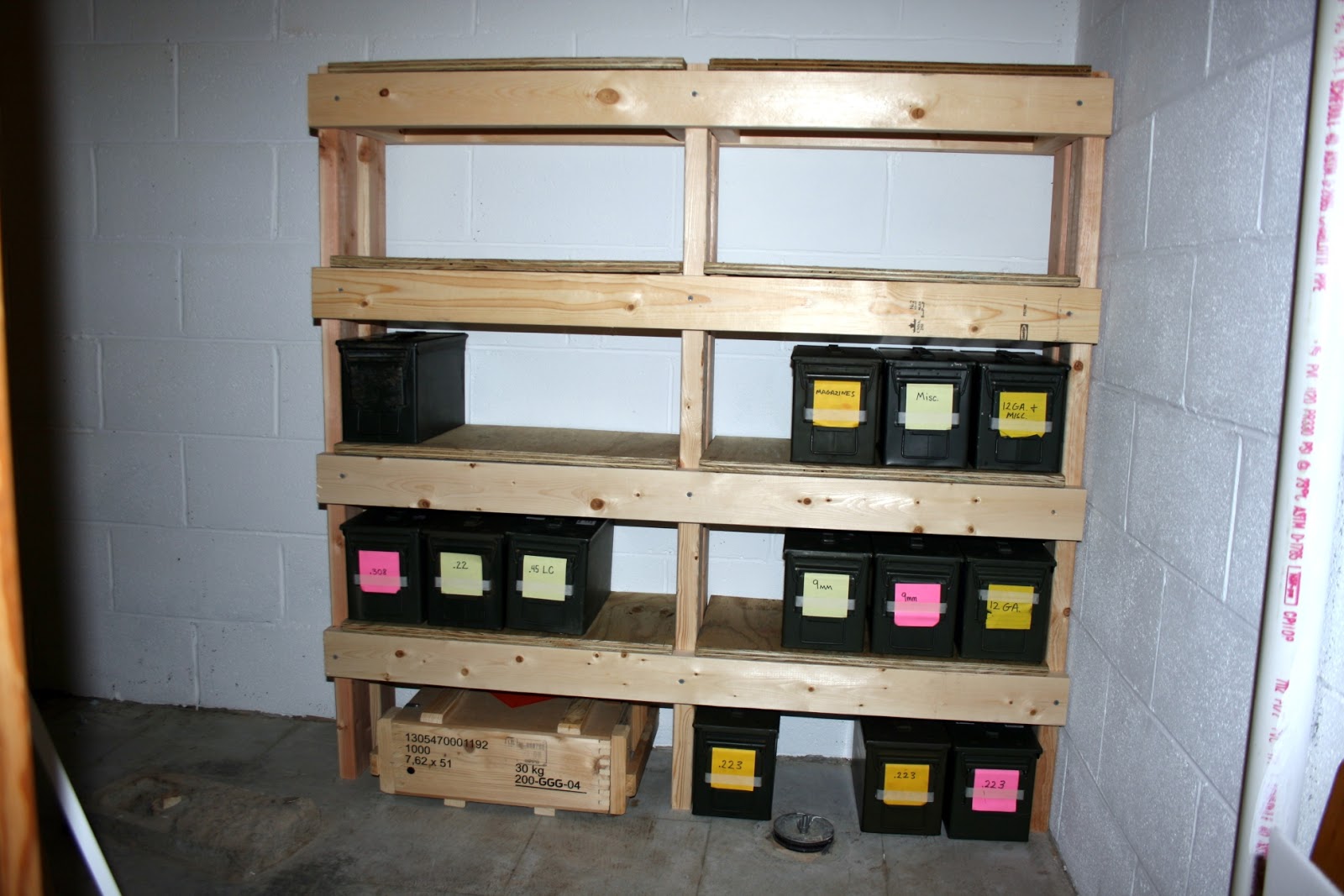
Adopt a first-in, first-out system for your handgun ammunition to ensure reliable function through proper rotation. When acquiring new boxes, place them behind older stock on your shelf or in your ammo can, so you consistently reach for the oldest rounds first for practice sessions. Visually inspect each cartridge during rotation for tarnishing, loose bullets, or cracked cases; pull any compromised rounds immediately. Reserve stored ammunition for emergencies, but cyclically shoot and replace them—ideally every six to twelve months—to verify they still chamber and fire correctly. Rotation prevents aged primers and powder from degrading, which reduces misfires and pressure variations, ultimately guaranteeing 6.5 Creedmoor Ammo for Sale that every round you depend on performs exactly when needed.

Common Questions About Feeding, Reliability, and Performance
When the slide locked back on my third magazine of mixed range loads, the question wasn’t *if* the round would feed—it was *why* this particular bullet shape kept snagging on the feed ramp. Common questions about feeding, reliability, and performance usually circle back to the same truth: a flat-nose or hollow-point profile demands a properly polished ramp, while round-nose ball ammo forgives a dirty chamber. I’ve seen a gun choke on light-loaded target rounds yet cycle hot defensive hollow-points flawlessly, proving that *reliability is a pairing, not a promise.*
Velocity shifts with barrel length, but feeding depends on case rim strength and OAL—so test the exact round you intend to carry.
During a dusty range day, a weak recoil spring failed to strip the next cartridge, but the same ammo ran fine after a spring swap—performance is always the gun’s answer to the ammo’s pressure curve, not a fixed label.
Why Certain Rounds Jam in Subcompacts and How to Fix It
Subcompacts are picky eaters because their shorter grip and tighter recoil spring leave less room for error, so certain rounds jam when bullet shape or case rim doesn’t match the feed ramp. Flat-nosed or hollow-point ammo often snags on the ramp, while light-for-caliber loads fail to cycle the slide fully. To fix it, first test a few box names—like Federal HST or Speer Gold Dot—to find what your gun digests, then polish the feed ramp with a felt tip and mild abrasive to smooth the transition. Also, swap to a heavier recoil spring if you shoot weak loads, and always load mags to full capacity but never overstuff them.
- Stick to round-nose or jacketed ammo until you confirm reliability.
- Lubricate the feed ramp lightly—too much oil attracts debris and causes hangs.
- Rack the slide firmly on the first round to seat it fully into battery.
Does Heavier Bullet Grain Actually Make a Difference in Self-Defense?
Yes, heavier bullet grain can make a real difference in self-defense, but it’s not about “stopping power” myths. In short-barrel handguns, heavy-for-caliber bullets like 147-grain 9mm or 230-grain .45 ACP tend to penetrate deeper and perform more consistently than lighter, faster loads, which may under-penetrate or fragment too early. Heavier grains also reduce perceived recoil impulse (felt as a push rather than a snap), letting you get back on target faster. That said, bullet design matters more than weight—a quality JHP in standard weight beats a cheap heavy round. specialty sports You sacrifice velocity, but for close-range threats, that trade-off rarely matters.
- Heavier grains improve barrier penetration (clothing, car glass) without over-penetrating walls.
- They cycle more reliably in suppressed or short-barrel pistols due to lower pressure spikes.
- Recoil feels softer and more manageable for rapid follow-up shots.
How to Test Different Loads to Find Your Pistol’s Preferred Diet
To uncover your pistol’s preferred diet, start by buying **defensive ammunition in three to five different grain weights and bullet profiles** (e.g., 115gr, 124gr, 147gr, plus a +P variant). Bring a shot timer and a target with a 3-inch circle. Fire five-shot groups from a rested bench at 10 yards, recording not just group size but also ejection pattern—brass flying at 2 o’clock suggests a stiff recoil spring, while 4 o’clock indicates a softer cycle. Then, run 200 rounds of each load through rapid fire, noting failures to feed, slide lock-back on empty, and muzzle rise recovery. Check your point of impact shift between loads; a zeroed sight for one weight often drifts with another. Finally, test in cold weather and after the gun is dirty, as fouling changes chamber pressure. Stick with the load that Shotgun Ammo for Sale consistently feeds and prints tight groups under both clean and dirty conditions.
Test three to five defensive loads by measuring group size, ejection angle, failure rates, and point-of-impact shift across clean and fouled conditions—then commit to the one that 7mm-08 Ammo for Sale cycles flawlessly every time.